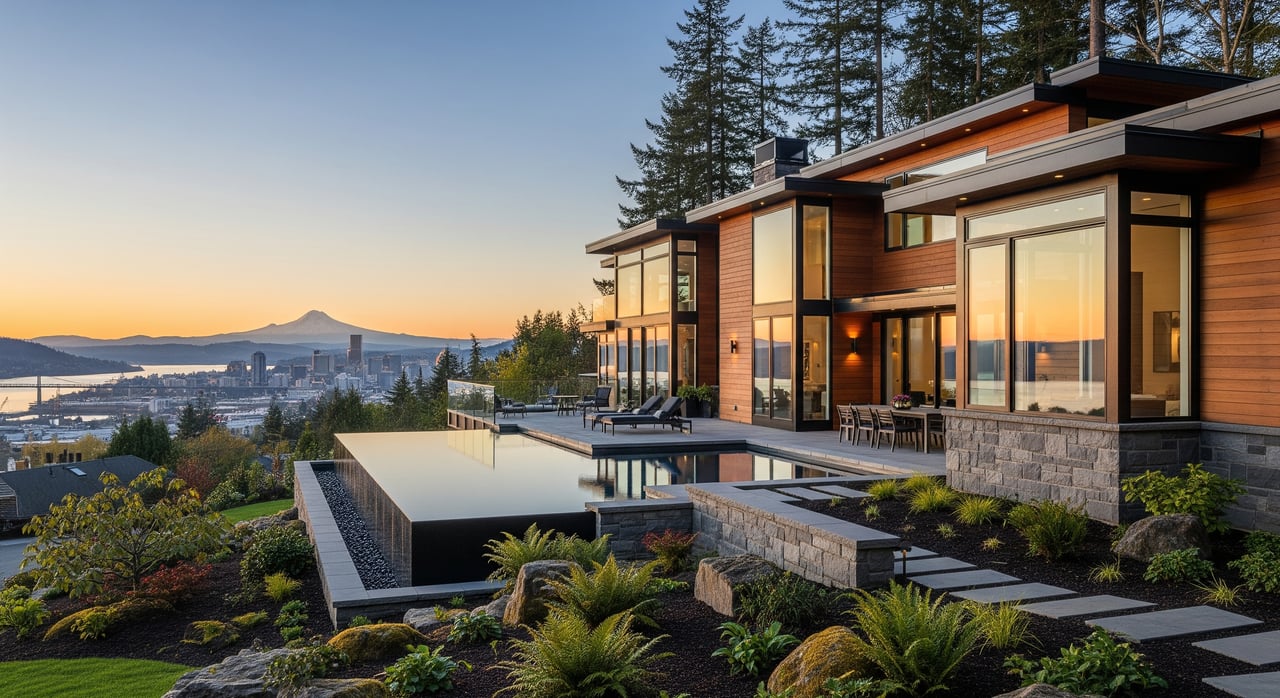
Are you watching West Hills prices and wondering what really moves the needle? In a market this refined, the details matter, from view corridors to slope overlays and jumbo financing. If you are planning to buy or sell, you need a clear picture of supply, price drivers, and timing. This guide breaks it down so you can act with confidence. Let’s dive in.
What counts as luxury in West Hills
We define the geography as the West and Southwest Hills west of I‑405 and north or west of downtown Portland, within Multnomah County. Examples include Hillside, Healy Heights, Skyline area, Maplewood, and Collins View. This area mixes architect-designed homes, mid-century estates, and bespoke custom builds.
For clarity, use two working definitions of luxury:
- Percentage approach: the top 10% of closed sales in the defined West/Southwest Hills area over the last 12 months.
- Price threshold approach: properties generally trading from the high six figures into the multi‑million range.
These definitions help you compare apples to apples as market conditions shift.
Supply: why inventory stays tight
Luxury supply in the West Hills is structurally limited. Large, flat, developable parcels are rare. Many lots are steep or heavily treed, which restricts subdivision options and keeps inventory thin.
Physical and regulatory limits
Steep-slope and environmental overlay zones add complexity to permits and design. Geotechnical studies, drainage planning, and construction staging on hillsides raise cost and timelines. Some pockets include historic or architectural review, which can affect the scope of remodels.
New build versus resale
Most luxury options are custom resales or one-off new builds rather than production subdivisions. New construction often commands a premium but takes longer to deliver. Buyers who value modern systems and warranties may wait for the right project, while others favor renovated mid-century originals.
Renovations and value-add
Many listings are updated mid-century homes with significant system upgrades. Opportunity properties with strong locations and views but dated interiors can sit longer, yet they offer compelling upside for buyers ready to renovate. Sellers who complete strategic updates and provide documentation reduce buyer friction.
Seasonality and macro backdrop
Spring and early summer bring a larger wave of listings, though life events still drive off-season supply. Interest rates and construction costs influence owner decisions to list or hold. Owners with low-rate mortgages may delay selling when rates are higher, which tightens inventory further.
Price drivers that matter most
Ultra-local characteristics set value in the West Hills. Focus on features that change use, enjoyment, and long-term risk.
Property-level factors
- Views and aspect: Clear river, downtown, and sunset views carry premiums. Permanence of the view line and orientation are key.
- Lot usability: Flat outdoor space, terraces, and a workable buildable footprint add meaningful value on hillside sites.
- Condition and systems: High-end kitchens, spa-level baths, smart-home features, elevators, seismic upgrades, and updated HVAC or radiant systems expand the buyer pool.
- Architecture and provenance: Notable architects and historically significant mid-century homes often command above-trend pricing.
- Indoor and outdoor amenities: Pools, guest houses, outdoor kitchens, and connected indoor-outdoor living areas resonate in this segment.
- Parking and access: Multi-car garages, straightforward access, and reasonable driveway slopes improve daily livability.
Location-level factors
- Urban access: Proximity to downtown, the Pearl District, and established private schools tends to support higher pricing because of convenience.
- Canopy and privacy: Mature trees and microclimates are prized for privacy and setting. They can also introduce maintenance or insurance considerations.
- Site risk: Slope stability, landslide exposure, and drainage influence pricing and financing. Buyers will weigh mitigation history and available reports.
- Viewshed permanence: The likelihood of future view obstruction affects valuation and long-term desirability.
Macro and financial factors
- Jumbo financing: Availability and pricing of jumbo mortgages shape affordability and bidding power in luxury tiers.
- Local economy: Strength in high-paying sectors supports demand for high-end housing.
- Construction costs: Elevated labor and materials increase replacement cost and favor quality renovations with documentation.
Days on market: what moves the timeline
Luxury properties do not all behave the same. A well-prepared listing with an accurate price can move quickly. Unique or hard-to-compare homes may need a longer runway to find the right buyer.
Why some homes sell faster
- Calibrated pricing: Pricing that reflects view, lot usability, condition, and access reduces time to offer.
- Marketing strategy: Professional media, targeted outreach, and global luxury syndication expand exposure to qualified buyers.
- Transaction readiness: Pre-listing inspections, geotechnical documentation, and clear permit history reduce surprises.
What to expect on timing
Expect more variance in days on market than in entry-level segments. Many well-positioned homes sell within the seasonal window of weeks to a few months. Highly unique properties can take longer due to a smaller qualified buyer pool.
Timing strategies for sellers
- Prepare before launch: Staging, floor plans, and pre-inspections speed buyer confidence.
- Price banding: Align price with common search brackets to maximize visibility.
- Access matters: Flexible showings and well-timed broker previews reach the right audience.
Timing strategies for buyers
- Be decision-ready: Secure jumbo pre-approval and line up cash reserves for inspections.
- Inspect smartly: Combine general inspections with geotechnical and drainage reviews where slope is present.
- Move quickly on fit: When a listing checks your non-negotiables, act decisively.
A simple valuation framework
Use this step-by-step method to evaluate value and timing in the West Hills luxury segment.
Step 1: Define market and peers
Set a clear boundary for the West/Southwest Hills and choose a luxury band, such as the top 10% of sales. Review the most recent 12 months of closed sales and current actives.
Step 2: Adjust the comps
Do not rely on raw price per square foot. Adjust for view quality and permanence, usable outdoor space, current condition of systems, and architectural significance. Apply thoughtful add or deduct amounts for each factor.
Step 3: Assess site risk and cost
Check for steep-slope and environmental overlays, past slides or drainage issues, and permit records. Estimate probable mitigation costs, such as retaining walls or engineered drainage, and reflect them in your valuation.
Step 4: Gauge liquidity and DOM
Benchmark days on market for similar properties and add time for unique features. For sellers, decide whether to pursue an aggressive or conservative list strategy based on recent absorption.
Step 5: Finance and closing risk
Review the current jumbo rate environment and consider appraisal risk if seeking a price premium. Confirm that the likely buyer pool supports the target price.
10-point due diligence checklist
- View type and permanence
- Lot usability and flat outdoor area
- Slope or geotechnical constraints and any landslide history
- Age and condition of roof, foundation, HVAC, and major systems
- Recent comparable sales and thoughtful adjustments
- Architectural pedigree or uniqueness
- Privacy, street access, and driveway slope
- Zoning, overlays, and expansion potential
- Parking capacity and guest parking options
- Marketing readiness, including floor plans and pre-inspections
Neighborhood scope and micro-areas
For this guide, the focus is the West and Southwest Hills west of I‑405, north or west of downtown. Notable micro-areas include Hillside, Healy Heights, and sections along the Skyline corridor. Nearby Southwest neighborhoods such as Maplewood and Collins View round out buyer options with varied lot profiles and access routes.
Each pocket balances setting, views, commute patterns, and site conditions differently. That is why hyper-local comp selection and site-specific due diligence are essential to accurate pricing.
How we position your success
You deserve advisory-level support and discreet execution. Our team pairs decades of West and Southwest Hills expertise with global luxury distribution. We bring calibrated pricing, concierge preparation, and coordinated vendor management to streamline complex hillside transactions.
For sellers, we deliver premium media, global syndication, and a launch plan tailored to your buyer profile. For buyers, we provide private previews, off-market reach when available, and fast-track due diligence with trusted local specialists. The goal is simple: clarity, confidence, and a smooth close.
Ready to move forward with a data-informed plan for the West Hills luxury market? Reach out to the Kendall Bergstrom Group to begin a private consultation.
FAQs
What defines a luxury home in Portland’s West Hills?
- We use two lenses: the top 10% of sales in the West/Southwest Hills over the past year and a practical price range from the high six figures into the multi‑million tier.
Why is West Hills luxury inventory limited?
- Steep terrain, environmental overlays, and a limited number of large, flat parcels constrain new supply, so most options are custom resales or one-off builds.
Which features most increase price in the West Hills?
- Clear, lasting views, usable flat outdoor space, upgraded systems, architectural pedigree, and straightforward access and parking are primary drivers.
How long do luxury homes take to sell in this area?
- Expect more variance than entry-level segments, with well-prepared and well-priced homes moving in weeks to a few months and unique properties taking longer.
What inspections should buyers prioritize on hillside homes?
- In addition to general inspections, consider geotechnical and drainage evaluations and a detailed permit history review to understand site conditions.